.png)
Breastfeeding, Healing, and Moving Again: What New Moms Want From Postpartum Exercise.
Updated: Mar 22
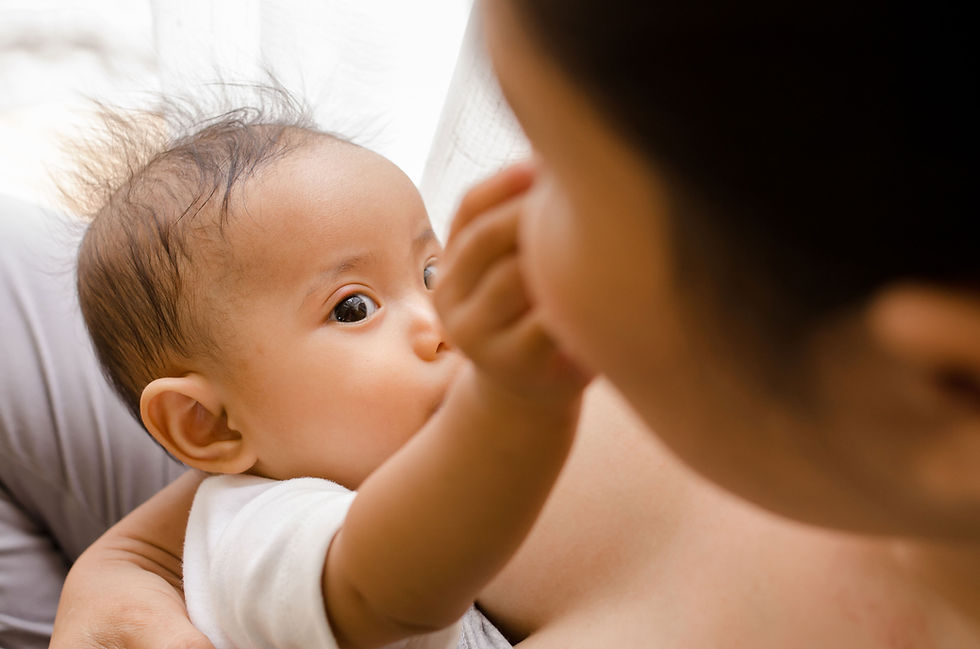
You’ve welcomed your little one into the world, and now you’re navigating the beautiful, messy, and often overwhelming transition into life with a new baby. Feeding your baby, whether through breastfeeding, formula, or a combination, comes with its own learning curve. Add in the desire to return to exercise, and it’s no surprise that many new parents feel stretched thin.
Researchers have been working to better understand what breastfeeding individuals need during this stage of motherhood, especially when it comes to physical activity. One area of interest is how breastfeeding may influence pelvic floor function and exercise tolerance.
Breastfeeding, Hormones, and the Pelvic Floor
Breastfeeding naturally lowers estrogen levels, and this hormonal shift can contribute to pelvic floor symptoms such as stress urinary incontinence—the involuntary leakage of urine with coughing, sneezing, laughing, or exercise. Some studies suggest that longer durations of breastfeeding may be associated with this type of incontinence, though the effects are temporary (Snyder).
Beyond pelvic floor changes, breastfeeding people may experience breast-related discomforts like nipple pain, mastitis, or challenges with milk supply. Any of these symptoms can understandably make exercise feel less accessible or appealing.
Why Exercise Still Matters
The benefits of movement in the postpartum period are well established. Physical activity supports:
Pelvic floor strength, coordination, and flexibility
Mental health and reduced risk of postpartum depression
Healthy weight changes after pregnancy
Lower risk of metabolic conditions (Edie et al.)
Despite these benefits, many postpartum women struggle to meet the recommended 150 minutes per week of moderate activity set by the U.S. Department of Health and Human Services and ACOG.
So what’s getting in the way?
🧡 What Mothers Say: Real Barriers, Real Needs
Two studies examining women 1–12 months postpartum, across all feeding types, shed light on the challenges breastfeeding individuals face.
Pelvic Floor Symptoms
The most commonly reported pelvic floor concerns were:
Stress urinary incontinence
Difficulty with bowel movements or straining
Interestingly, pelvic floor dysfunction was not linked to whether someone exclusively breastfed or supplemented. Instead, a higher BMI was the strongest predictor of pelvic floor complaints. (Number of children and baby’s age were not predictive factors.)
You can calculate BMI here
What Breastfeeding Women Want in an Exercise Program
Across the board, women expressed a desire for:
Pelvic floor strengthening
Clear guidance on what exercises are safe
Upper‑body strengthening and stretching to support changes in posture and breast/chest demands during feeding
The Biggest Barriers to Exercise (Edie et al.)
Limited time or social support due to childcare needs
Fatigue and disrupted sleep
Unpredictable daily routines
Not surprisingly, activity levels dropped from pre‑pregnancy to postpartum—from 88.9% participation to 79%. The most common forms of movement were walking, cycling, and other light activities totaling at least four hours per week (Snyder et al.).
Do any of these sound like you? Foothill Physical Therapy works with pregnant and postpartum mothers to address health needs. From helping you on your birthing plan and general health during pregnancy to working with postpartum symptoms like pelvic pain, incontinence, diastasis rectus abdominus concerns and return to exercise, you are supported! You may click to schedule an appointment, contact us to start your healing journey and start reaching your goals.
References:
Edie, Rebekah SPT1; Lacewell, Alexis SPT1; Streisel, Christine SPT1; Wheeler, Lauren SPT1; George, Ellie SPT1; Wrigley, Jordan MA, MSLS2; Pietrosimone, Laura PT, DPT, PhD1; Figuers, Carol PT, EdD1. Barriers to Exercise in Postpartum Women: A Mixed-Methods Systematic Review. Journal of Women's Health Physical Therapy 45(2):p 83-92, April/June 2021. | DOI: 10.1097/JWH.0000000000000201
https://journals.lww.com/jwphpt/fulltext/2021/04000/_no_one_told_me_about_this_part___what.2.aspx
Snyder, Kailey PhD; Peterson, Julie PT, DPT; Bargstadt-Wilson, Kari PT, MPT. “No One Told Me About This Part”: What Breastfeeding Women Want and Need to Support Their Physical Health. Journal of Women's Health Physical Therapy 45(2):p 51-56, April/June 2021. | DOI: 10.1097/JWH.0000000000000195
https://journals.lww.com/jwphpt/fulltext/2019/10000/perceptions_of_physical_activity_while.5.aspx
Snyder, Kailey PhD1; Hanson, Corrine PhD2; Hill, Jenni PhD3; Dinkel, Danae PhD4. Perceptions of Physical Activity While Breastfeeding Using the Self-determination Theory. Journal of Women's Health Physical Therapy 43(4):p 180-187, October/December 2019. | DOI: 10.1097/JWH.000000000000014


thoitiethomnay.org có đáng để mở mỗi sáng không? Mình nghĩ là có, ít nhất là khi cần xem nhanh theo tỉnh. Vào trang là thấy ngay nhiệt độ hiện tại và dòng “cảm giác như”, nhìn cái là biết nên mặc gì. Mấy chỉ số cơ bản đi kèm cũng đủ dùng, không phải lục thêm chỗ khác. Mình hay chọn tỉnh thành trong mục chọn địa phương, bấm một cái là sang đúng trang của nơi đó luôn. Dữ liệu cập nhật trong ngày nên con số nhìn còn mới, không bị kiểu hôm qua. Chữ số nhiệt độ để khá to nên liếc cái là thấy. Phía dưới còn có danh sách tỉnh thành dạng ô để chọn…
rút tiền fly88 nghe mọi người bàn hoài, mà mình lại để ý cái chủ đề “2026” trên trang trước vì tiêu đề làm nổi bật khá rõ nên đọc lướt phát là nắm được họ đang nói về phiên bản năm nay; rồi mình mới kéo xuống xem thử có nhắc gì đến chuyện rút tiền không, kiểu chỉ check nhanh chứ không định ngồi soi từng dòng, thấy họ viết thẳng là giao dịch xử lý nhanh và ổn định, nạp rút được mọi lúc trong ngày; nghe thì vẫn phải tự trải nghiệm mới biết, nhưng ít nhất cách họ đặt thông tin này ở khối riêng, câu chữ gọn và dễ tìm nên đỡ mất công;…
rr88 mình cũng kiểu nghe mọi người nhắc hoài nên bấm vào xem thử cho biết chứ không định tìm hiểu sâu. Vừa vào thấy trang làm khá “dễ thở”, không nhồi nhét quá nhiều thứ một lúc nên mắt đỡ mệt. Mình thích nhất là cách họ chia nội dung thành từng khối riêng, nhìn phát là biết phần nào ra phần đó, kéo xuống cũng không bị lạc. Mấy chỗ hiển thị thông tin dạng bảng cột nhìn gọn gàng, liếc nhanh vẫn nắm được ý chính. Thanh menu đặt khá nổi nên chuyển qua lại giữa các mục không phải mò, cảm giác thao tác mượt và ít rối. Nói chung lướt vài phút thôi mà thấy…
kèo nhà cái 5 chuẩn mình thấy mọi người nhắc hoài nên tiện tay bấm vào nghía thử, kiểu xem giao diện ra sao thôi chứ chưa định đọc kỹ. Vào cái là thấy trang làm khá gọn, khoảng trắng vừa đủ nên nhìn không bị bí. Mấy mục chính được xếp theo nhóm rõ ràng, kéo xuống một chút là biết mình đang xem phần nào, không phải đoán. Mình cũng thích cách họ trình bày dữ liệu theo kiểu bảng cột, nhìn lướt nhanh là bắt được ý, đỡ rối hơn mấy trang nhồi chữ. Chuyển qua lại giữa các mục cũng ổn vì menu đặt dễ thấy, không cần bấm vòng vòng. Nói chung trải nghiệm ban…
Bài viết của bạn ngắn gọn mà dễ hiểu, mình đọc liền một lượt là nắm được ý chính rồi, cảm ơn bạn đã chia sẻ. Mình cũng có thói quen xem thống kê XSMB mỗi ngày để theo dõi cho tiện, nhưng trước đây toàn phải mở nhiều nơi khác nhau nên khá mất thời gian. Gần đây mình hay ghé https://soicau247.com/du-doan-xsmb-c59.html để xem nhanh rồi đối chiếu, sau đó tự ghi chú và gom lại thành một trang riêng của mình để lúc cần chỉ mở ra là có ngay. Không phải ngày nào cũng rảnh để ngồi tra từng nguồn, nên có chỗ tổng hợp lại giúp mình đỡ bị rối và đỡ quên. Ai hay cập…